// EU-funded projects

Websites for EU-funded projects

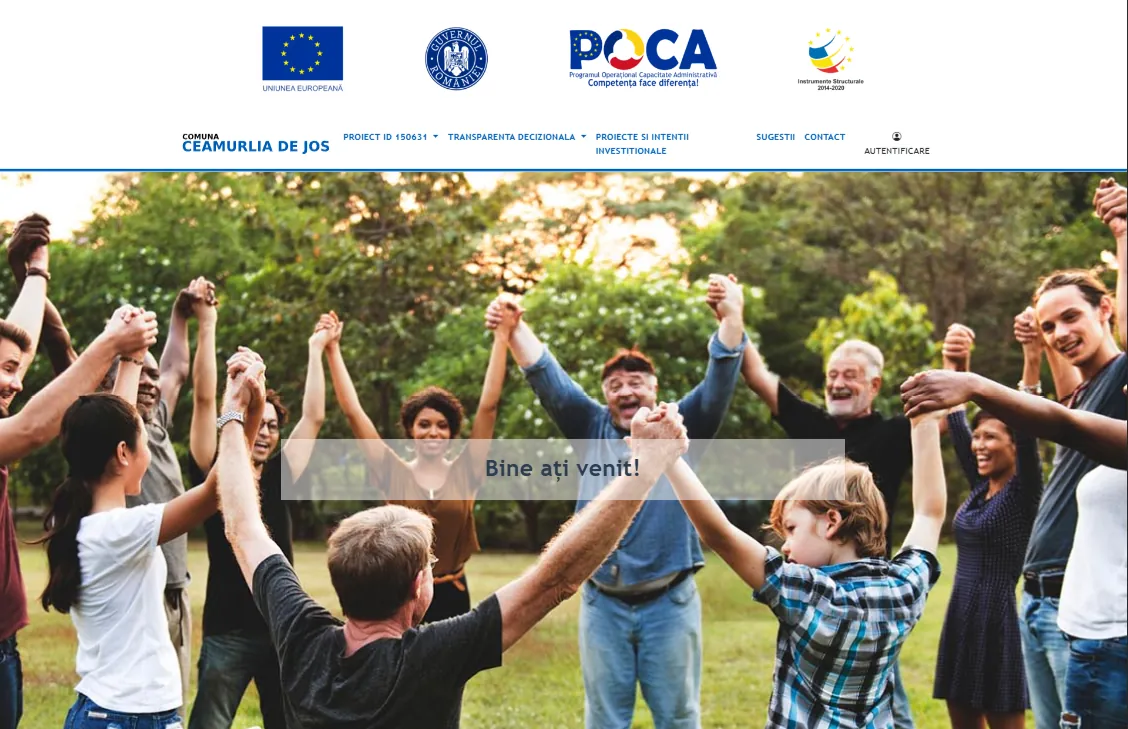
We build project websites and project pages that follow the visibility rules for EU funding: the set of logos and the funding statement, the project description, announcements, documents and online registration. We built the website of the Go Social project, the DigiSoc platform and the platform of Ceamurlia de Jos commune.

2015
the year we started building custom websites and software, in Bucharest
4
websites and platforms for EU-funded projects, shown below
10
languages on the DigiSoc project platform, for partners from seven countries
0
scrolls needed to see the logos and the funding statement, on any screen
// visibility requirements

What an EU project website must include

The project website or page is the main source of information about the project, for the public and for the funder. These are the elements required by the visual identity manual, and we build them into every project website.

The mandatory set of logos

The EU emblem with the funding statement, the Government of Romania logo and the programme logo, if there is one, in full colour. We place them at the top of the page, visible without scrolling on any device.

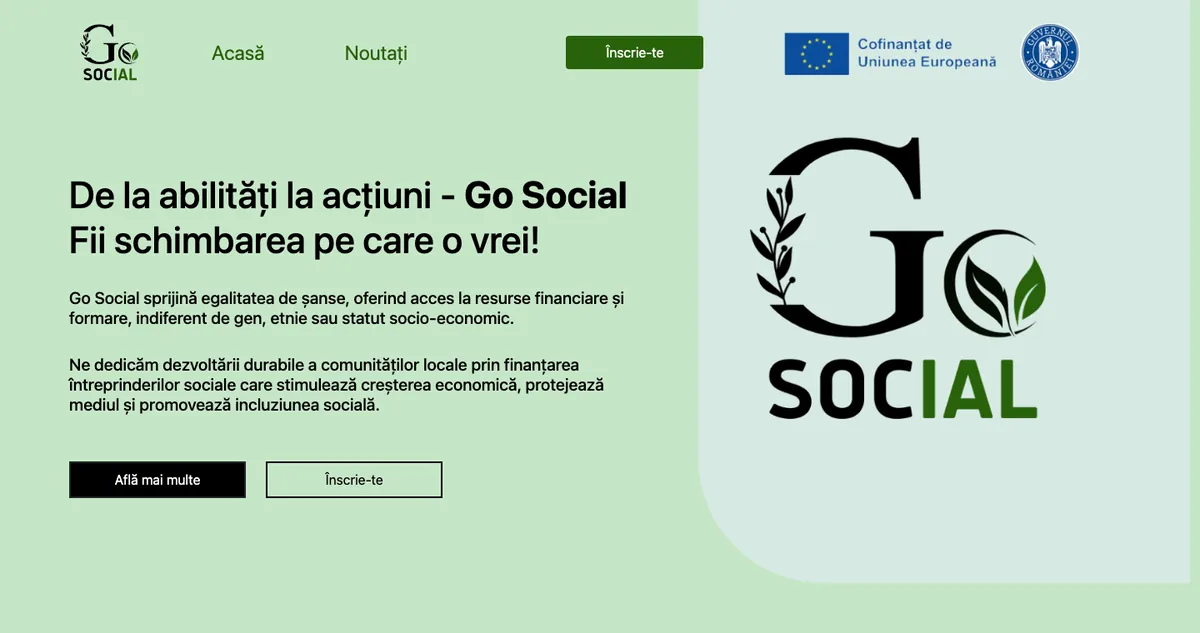
Example: the Go Social header, with the EU co-funding statement.

The project description

The project and beneficiary names, objectives, expected results, total value and, separately, the EU co-funding, start and end dates, and the MySMIS code or another unique project code.

Example: the page of project ID 150631 on the Ceamurlia de Jos platform.

Announcements on project progress

Launch and closing press releases and news along the way, highlighting the EU support. The project team publishes them on its own, from the admin panel.

Example: the news with attached documents on the Go Social website.

Documents and results

The project fact sheet, methodologies, reports and deliverables as PDF downloads, plus photos, infographics or videos showing how the project is progressing.

Example: the Go Social fact sheet and competition methodology.

A link to the ministry (MIPE)

A link to the website of Romania's Ministry of Investments and European Projects, with the standard statement inviting visitors to www.mfe.gov.ro for detailed information on the other programmes co-financed by the European Union.

Online for the whole project

The project description stays online until the project ends and throughout the sustainability period. We take care of hosting and updates for that whole time.

The exact requirements differ from one programme to another. We start from the financing contract, the applicant's guide and your programme's visual identity manual, and check every requirement before launch.

// options

A new project website or a page on your current site?

Not every project needs a separate website. We choose the right option together, based on the audience, the project activities and what the programme requires.

dedicated website

A separate project website

Suited to projects with a broad audience, registrations, partners from several countries or content in several languages.

  • its own address and the project's identity
  • overview, stages, news and documents
  • registration forms, user accounts, several languages

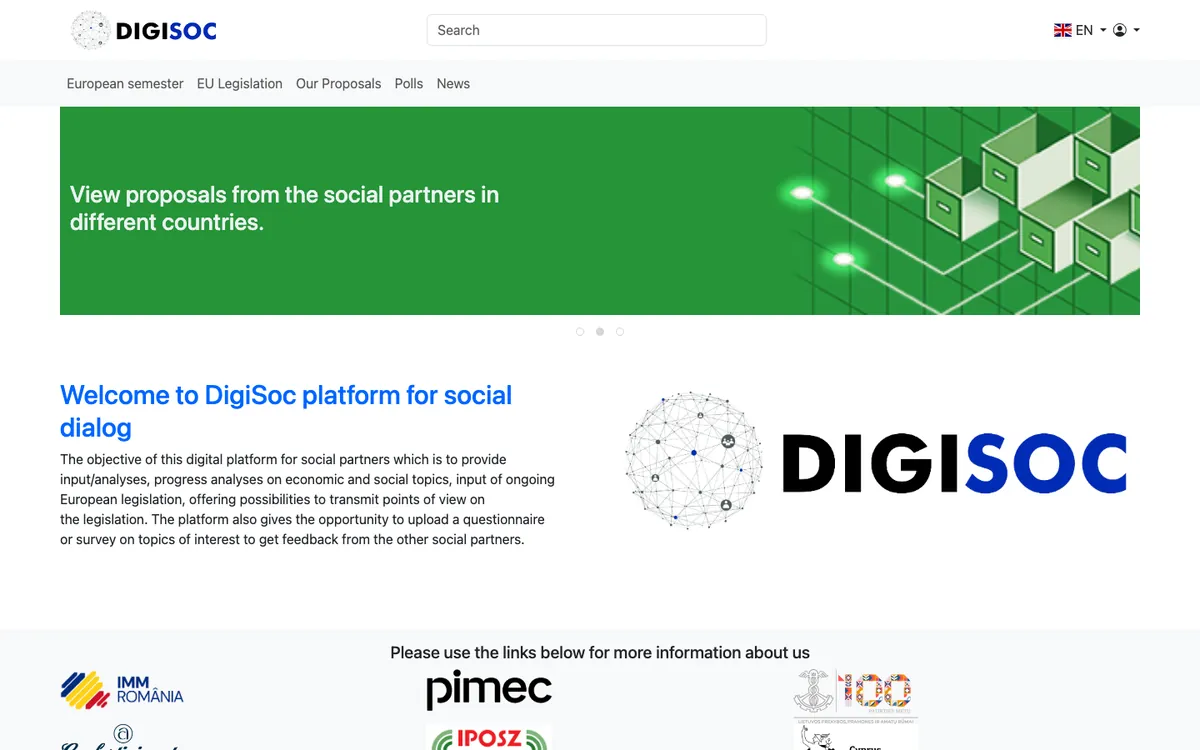
Examples: Go Social and EU Social Dialogue.

existing website

A project page on your website

If your company or organisation already has a website, we add a subpage dedicated to the project.

  • a banner on the home page, linking to the project
  • announcements on project progress, on the subpage
  • for several projects, a page listing them all

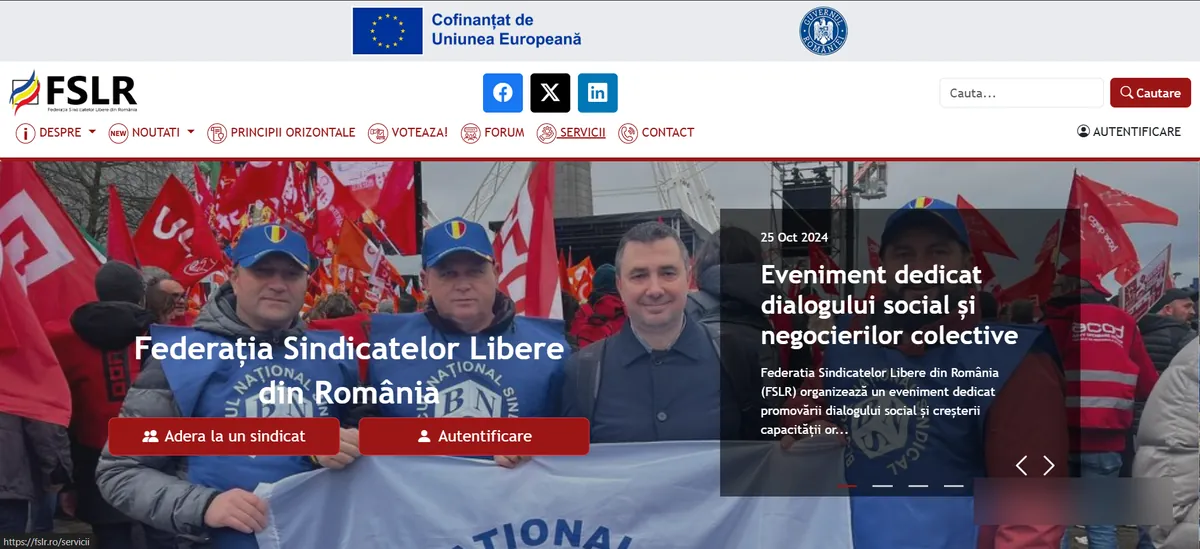
Example: the FSLR website, with the co-funding statements in the header and footer.

also

Social media

The same rules apply to the beneficiary's social media pages, adapted to the format.

  • the mandatory logos in the cover image, without covering the profile picture
  • the EU support mentioned in the page description
  • a pinned post for each project

On the website, every announcement gets share buttons, so posts link back to the project.

// portfolio

Websites and platforms for EU-funded projects

Four projects from our portfolio, funded through different programmes: social inclusion, administrative capacity, the European Social Fund Plus and European social dialogue. The details are in the case studies.

The gosocial.ptir.ro home page, "From skills to action – Go Social", with the EU co-funding and Romanian Government logos
// project website · PIDS 2021–2027

Go Social: an EU project website for PTIR

The website of the Go Social project (ID 311119), funded through the Inclusion and Social Dignity Programme 2021–2027, which supports the creation of social enterprises in rural areas of the Bucharest-Ilfov region.

  • The EU co-funding statement and the Government of Romania logo in the header of every page
  • The project stages with their periods, and the target group by category
  • News with attached documents and social media sharing
  • A programme registration form, with the participant category
Read the Go Social case study
See the full portfolio

Working at an EU funding consultancy? We also built the New Idea Building website.

// features

What else the project website can do

Beyond the mandatory pages, the website can work for the project: bring in participants, keep partners informed and collect the figures for reporting. Every feature below is in a website from our portfolio.

  • Target group registration
  • Stages and deadlines
  • News with attachments
  • Several languages
  • User accounts
  • Suggestions and proposals
  • Search and filters
  • Social media sharing
  • Admin panel
  • Responsive design
  • Cookies and GDPR

We build to the W3C accessibility criteria: sufficient contrast, keyboard navigation, alternative text for images and headings in order, so visitors easily find what they need. If the project needs more than a website, see web application development.

Communication indicators, ready to report

We set up Google Analytics 4, with a consent banner, so you have the figures required in periodic reports:

  • number of visitors and page views
  • average visit time and how far visitors scroll
  • traffic sources: search, social media, press releases
  • conversions: downloads, registrations, submitted forms

Opinion indicators are measured with surveys, which we can add to the website.

// process

How we build an EU project website

We start from the programme rules, not from a template. We work with the project team from the quote to the end of the sustainability period.

  1. 01

    We read the programme rules

    The financing contract, the applicant's guide and the visual identity manual: what must appear on the website, and by when.

  2. 02

    Quote and specifications

    You get a free written quote with the pages, features and deadlines, also useful for the project's procurement file.

  3. 03

    Design in the project's identity

    Mock-ups for the home page and the project page, with the mandatory logos placed correctly, approved by you.

  4. 04

    Development and content

    We build the website and the admin panel and upload the texts, logos and documents from the project team.

  5. 05

    Pre-launch check

    We tick off the visibility requirements on phone, tablet and desktop, then speed, accessibility and forms.

  6. 06

    Launch and training

    We put the website online and show the team how to publish announcements and documents on their own.

  7. 07

    Hosting and maintenance

    We keep the website online, up to date and secure for the whole project and sustainability period.

// budget and timeline

How much does an EU project website cost?

The price depends on what the website must do beyond the mandatory pages. These are the factors that matter most.

Option and pages

A separate website or a page on your current site, and how many sections it has.

Languages

How many languages the website has and who does the translations.

Features

Registrations, accounts, suggestions, surveys or other forms.

Content

Whether the texts, photos and documents are ready or we prepare them together.

Your current website

For a project page, the platform your current website runs on matters.

Hosting and maintenance

For the whole project and sustainability period.

The timeline depends on the same factors. Tell us the date of the project launch announcement and we plan delivery around it, so the first press release has somewhere to link to.

The quote is free

After a first conversation, we send you a quote with the specifications and the timeline. To make it as accurate as possible, tell us:

  • the funding programme and the project period;
  • whether you want a separate website or a page on your current site;
  • what the website must do beyond the mandatory pages: registrations, languages, documents.
Request a quote
// questions

Frequently asked questions about project websites

Not necessarily. A beneficiary with its own website can create a subpage dedicated to the project, with a banner on the home page linking to it. A separate website is worth it when the project has a broad audience, registrations, partners or several languages. Check what your programme requires, too.

You will find the deadline in the financing contract and in the programme's visual identity manual. Our recommendation: have the project website or page ready for the launch announcement, so the first press release already links to it.

The project description stays online for the whole project and during the sustainability period after it ends. Our quote includes hosting and maintenance for that whole period, so the website does not disappear early.

It depends on the programme and the approved budget. Usually the cost falls under information and publicity activities, but the exact rule is in the applicant's guide. We send you a detailed quote that you can use in the procurement procedure.

The project team, from the admin panel: news, documents, stages and photos, with no technical knowledge needed. We show them how at launch. If you prefer, we can publish them as part of maintenance.

Yes. The EU Social Dialogue platform, from the DigiSoc project, has ten languages, and each partner publishes its own content in its language.

Yes. The website structure is the same; only the visibility elements change: the EU emblem with the statement “Funded by the European Union – NextGenerationEU” and anything else required by the PNRR visual identity manual.

// technologies

What software technologies do we use?

Our main technology for web projects is Laravel, a PHP framework with elegant syntax that scales easily and offers excellent security.

Laravel doesn't stop us from working with .NET, Java, Swift or other technologies when a project calls for it. We prefer it for the web because it lets us deliver similar projects faster, at a lower development cost.

  • Artificial intelligence
  • Deep Learning
  • TensorFlow
  • .NET Framework
  • .NET Core
  • Java EE
  • Python
  • PHP
  • main Laravel
  • React
  • Vue.js
  • Bootstrap
  • REST API
  • Android
  • iOS
  • Swift
  • Jira
  • Git
  • GitHub
  • Bitbucket
  • SQL Server
  • MySQL
  • MariaDB
  • MongoDB
// next step

Do you have a project you want to develop?

Write to us or give us a call and we will set up a meeting. We reply with questions first, then with a free quote that covers cost and timeline.

Or email us at contact@devteam.ro.