// custom B2B eCommerce

Custom B2B eCommerce platforms and online stores

DevTeam builds custom B2B eCommerce platforms and online stores for distributors, manufacturers and wholesalers: company accounts, customer-specific offers, orders tied to stock, invoicing and shipping. Our work includes Angrozenda, a wholesale channel running on the same catalogue as the Zenda online outlet and eMAG Marketplace, and FireShop, a multi-store B2B platform. We have been building custom software in Bucharest, Romania, since 2015.

10,000+
products in the Zenda catalogue, sold in the store, wholesale and on eMAG
60,000
active users on the Zenda platform, built by DevTeam
13,000+
products in the D&G Group catalogue, synced from Neosys
1,300+
customers managed in the D&G Group order platform
// B2B features

What a B2B eCommerce platform can include

When you sell to businesses, an order is more than a shopping cart: the company account, the negotiated price, the quantities, the quote, the invoice and the delivery all matter. A custom B2B platform has exactly the features you need. We have already built most of them in delivered projects.

Company accounts

Each customer has its company details, contact persons and several delivery points, and sees its orders and offers in its account.

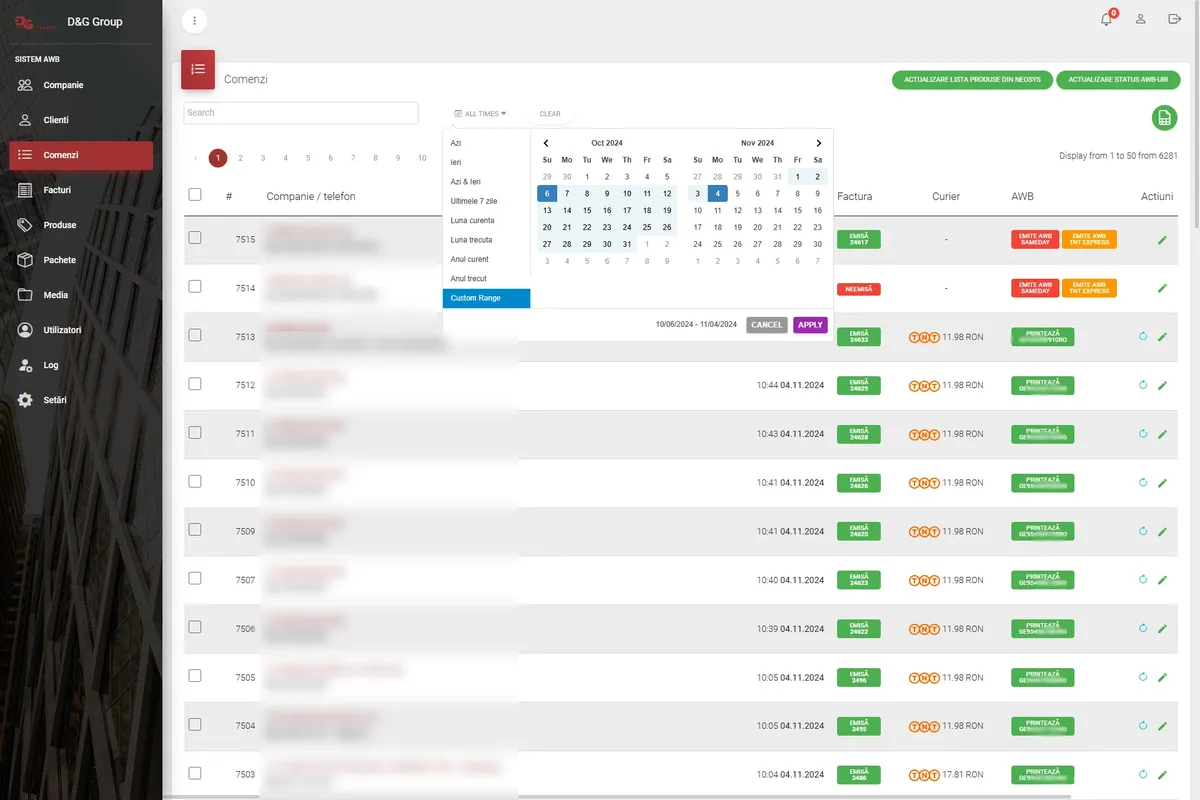
Example: customers with a head office, delivery points and VAT status in the D&G Group platform.

Customer pricing and offers

Discounts by product, category, customer or cart, vouchers, and prices shown excluding VAT for business buyers.

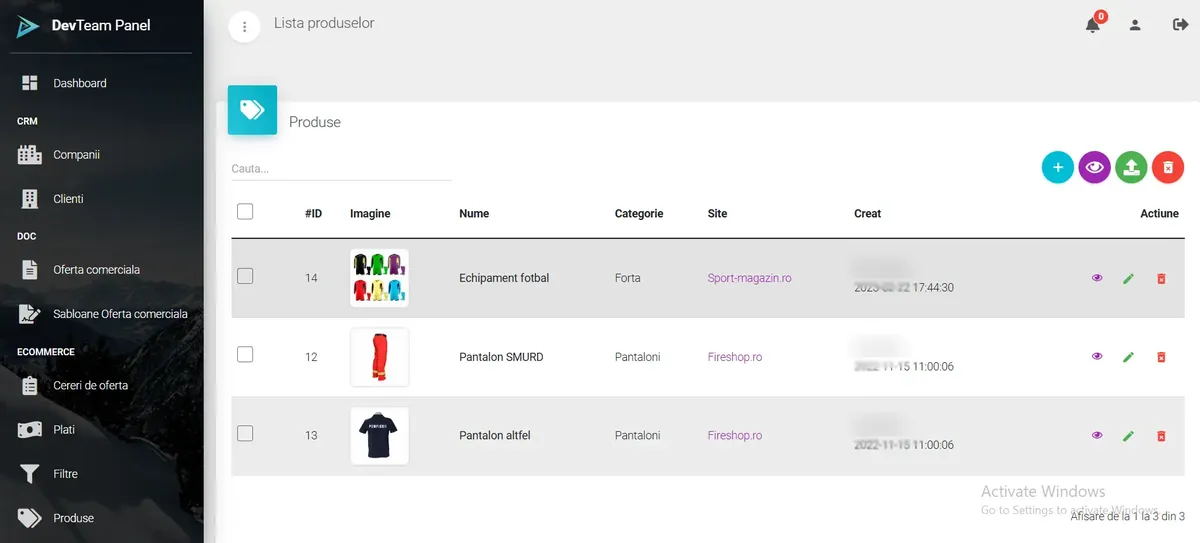
Example: prioritised offers in the Zenda admin panel and VAT-exclusive prices on FireShop.

Wholesale catalogue

Products grouped by series, sizes or attributes, with the number of pieces per pack and filters on the attributes that matter in your industry.

Example: series and packs on Angrozenda, Zenda's wholesale channel.

Quick ordering

Products go into the cart straight from the list, without opening each page. For large orders, buyers can also order from product codes or a file.

Example: on Angrozenda, shops add products to the cart straight from the category page.

Quote requests and sales quotes

For products sold on quote: the request arrives with the technical details, and the quote is built from templates.

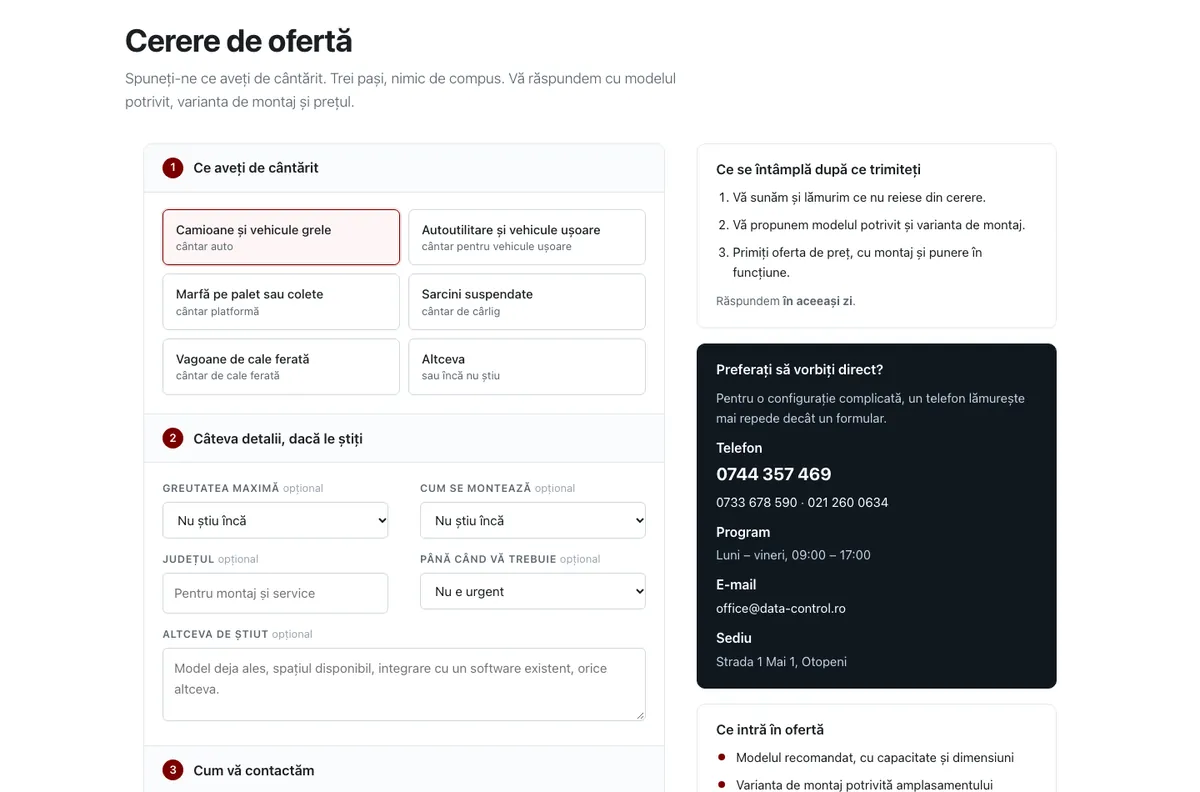
Example: the three-step quote request at Data Control and the template-based quotes at FireShop.

Orders, invoices and shipping labels

The order checks stock, the invoice is issued or linked to the order, and the shipping label is created with the chosen courier.

Example: Sameday and TNT Express labels issued from the order at D&G Group.

Several stores, one admin panel

Different brands or companies on one platform: each store with its own name and design, with products, customers and orders in the same panel.

Example: the FireShop, ForestShop and Sport-Magazin stores, on one codebase.

Roles, reports and audit log

Access levels for your team, sales, order and invoice reports, and a log of every action.

Example: up to 10 access levels at Zenda and more than 18,700 entries in the D&G Group activity log.

// portfolio

B2B platforms and online stores we have delivered

Wholesale channels, platforms for distributors and online stores for manufacturers and brands. We also work on existing stores: for NailsUp, we built sales widgets and refreshed the design without rebuilding the platform. The details are in the case studies.

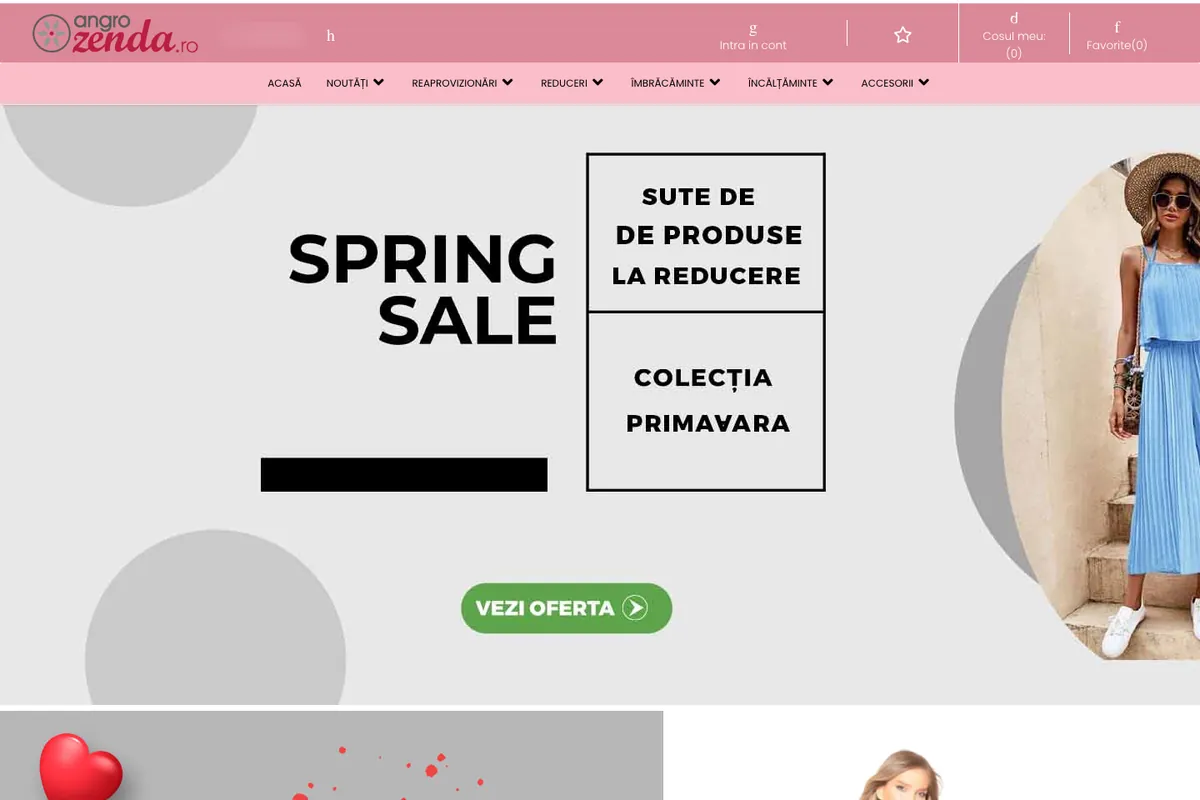
The angrozenda.ro home page, with the menu for new arrivals, restocks and discounts and the Spring Sale campaign
// B2C and B2B eCommerce · 2016 – 2024

Zenda and Angrozenda: one catalogue, three sales channels

The zenda.ro online outlet and angrozenda.ro, the wholesale channel for clothing retailers, run on the same platform built by DevTeam, with one admin panel for offers, stock, delivery, invoicing and reports.

  • The same catalogue feeds the store, the wholesale channel and eMAG Marketplace
  • On Angrozenda, products are grouped by series and sizes, with the pieces per pack
  • The courier is picked automatically through APIs, by region, customer type or cart value
  • Invoices are issued automatically and exported to the Saga accounting software
  • More than 10,000 products and up to 100,000 page views a day
Read the Zenda and Angrozenda case study
// how to choose

When a custom platform makes more sense than Shopify or WooCommerce

Off-the-shelf platforms are a good choice for many stores. A custom platform pays off when your sales depend on rules and systems a standard platform struggles to cover: business customers, customer-specific pricing, ERP integration or several channels on one catalogue.

Comparison between an off-the-shelf eCommerce platform and a custom platform
Criterion SaaS platform (e.g. Shopify) or WooCommerce Custom platform
Getting started Fast: pick a theme, add your products and the extensions you need. After analysis and development. You can launch with the essentials and add the rest in stages.
Business customers Customer accounts and standard discounts; B2B rules usually come from extensions or higher-tier plans. Company accounts, customer-specific offers and prices, a wholesale catalogue and quote requests, built on your rules.
ERP and inventory Through apps and connectors, if one exists for your system. An integration built for your inventory, accounting or ERP system.
Sales channels The store and the channels offered by the platform or its extensions. One catalogue for your store, a wholesale channel, marketplaces and several stores.
Cost A subscription or hosting, plus paid themes and extensions, as needed. Development, estimated in the quote, then hosting and maintenance, agreed in the contract.
New features Those offered by the platform and the available extensions. When you need them, in the order of your priorities.

A custom platform pays off if:

  • you sell to businesses, with prices, discounts or terms that vary from one customer to another;
  • orders have to reach your ERP, inventory or accounting system without retyping;
  • you sell one catalogue on several channels: a store, a wholesale channel, marketplaces or several stores;
  • you have a large catalogue and campaigns that change prices across whole categories;
  • you already pay for several extensions and subscriptions to cover the way your company works.
// start simpler

Selling to consumers, with a small catalogue?

Then a SaaS platform or WooCommerce may be the right choice. If you want a store with its own design, we build it on our eCommerce platform, as we did for EcoFlex and BayLaurelShop: catalogue, cart, online payments, delivery, offers and vouchers, all managed from one admin panel.

Custom websites and online stores
// integrations

Connecting your online store to your ERP, marketplaces and couriers

A B2B platform pays off when orders, stock and invoices flow between systems on their own. These are integrations we have built in delivered stores and platforms, mostly for clients in Romania.

  • Inventory software: Neosys
  • Accounting: export to Saga
  • Invoicing: SmartBill
  • ANAF RO e-Factura (e-invoicing)
  • eMAG Marketplace
  • Couriers: Sameday, TNT Express, FAN Courier
  • Pallet shipping: PALLEX
  • Online payments: LibraPay, BT Pay, NETOPIA Payments
  • Newsletter: MailChimp
  • Affiliate networks: Profitshare, 2Performant
  • Data import and export

For Zenda, products, orders and stock are synchronised with eMAG Marketplace, the courier is picked automatically through APIs and invoices are exported to Saga. At D&G Group, the catalogue is updated from Neosys and shipping labels are issued from the order. At EcoFlex, the pro forma and the invoice are issued in SmartBill straight from the order. For companies in Romania, invoices go to RO e-Factura through the ANAF API, with the company's digital certificate, as at Time Critical Line and Data Control; we are also the technology partner of eFacturia. For your ERP, marketplace, carrier or payment provider, we check the API documentation and the integration effort during the analysis.

Online store and ERP in one system

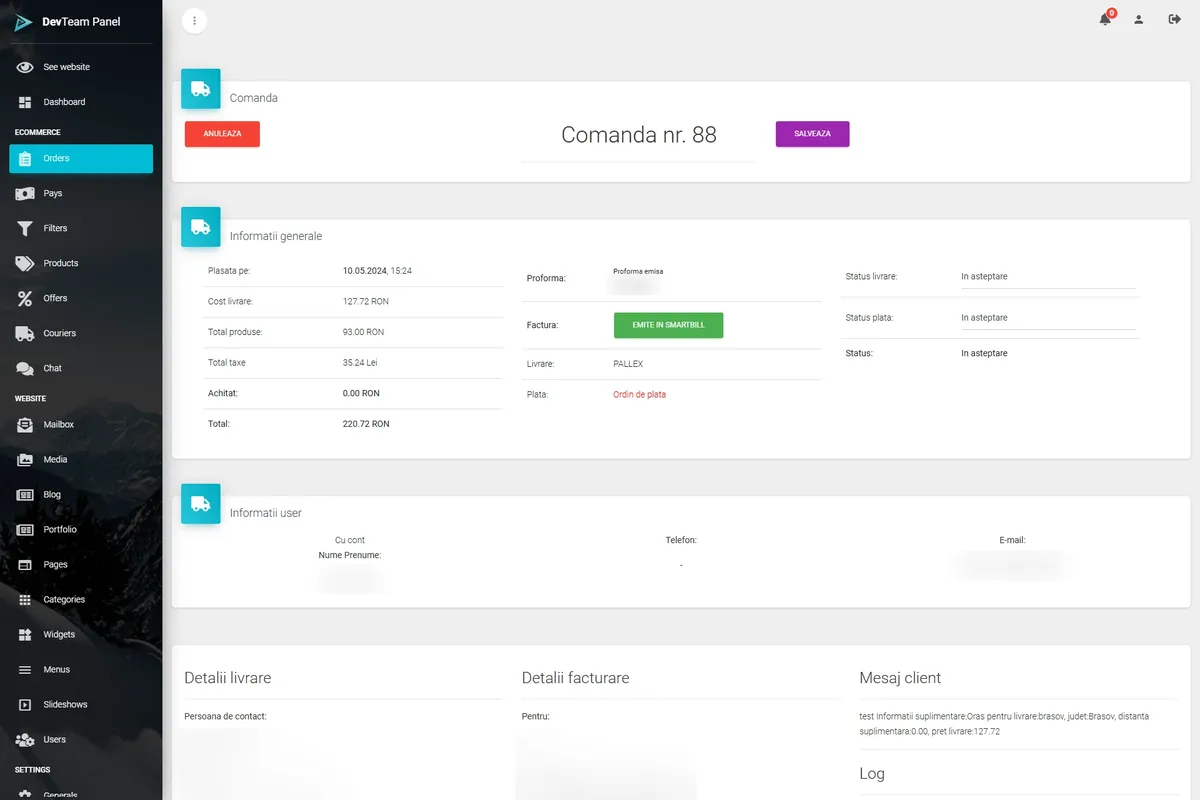
If stock, purchasing and invoicing do not live in one system yet, the B2B platform can be the sales side of a custom ERP, as at D&G Group, where the order, the invoice and the shipping label are linked together.

Custom ERP development
// process

How we build a B2B platform

We start from the way you sell: to whom, on which channels, at what prices, and which systems your products and stock come from. We build in stages, with demos along the way, so you see the platform take shape and can change direction early. With international clients, specifications, demos and day-to-day communication are in English.

  1. 01

    Sales analysis

    We map the channels (store, partner portal, marketplaces), the customer types and the pricing rules, then the systems the platform has to talk to: ERP, inventory, accounting, couriers, payments.

  2. 02

    Estimate and quote

    You get a cost and time estimate, broken down into stages. The quote is free.

  3. 03

    Design

    Wireframes and designs for the catalogue, product page, cart and customer account, approved by you.

  4. 04

    Development in stages, with demos

    We build the platform module by module and show it to you along the way, not just at the end.

  5. 05

    Catalogue import and testing

    We import your existing products, customers and prices and test orders end to end: stock, invoice, shipping label and payment.

  6. 06

    Launch and training

    We put the platform live and train the team that runs it.

  7. 07

    Maintenance and new features

    Technical support, updates and new features as your sales grow. We worked on the Zenda platform, for example, from 2016 to 2024.

// budget and timeline

How much a B2B platform or online store costs, and how long it takes

We do not publish a separate starting price for B2B platforms and online stores: we estimate them in the quote, after the analysis, because the channels, pricing rules and integrations make the difference. For reference, a custom website starts at €2,000 + VAT (about one month), and an online store is one of the things that raise the price. A custom web application, the category B2B portals with integrations fall into, starts at €7,000 + VAT (2–3 months), and an ERP with stock, purchasing and invoicing at €9,000 + VAT (3–4 months).

Sales channels

A store, a partner portal, marketplaces or several stores on one admin panel.

Customers and pricing

Customer types, customer-specific offers and prices, quote requests and approvals.

Integrations

Your ERP or inventory system, accounting, couriers, payments and marketplaces.

Catalogue and existing data

The number of products, variants and attributes, plus the import from your current system.

Payments and delivery

The payment provider, the couriers and shipping calculated per order, as at EcoFlex.

Maintenance

Support, updates and new features after launch.

We can launch with the essentials (catalogue, customer accounts, orders) and add the rest in stages while the platform is already selling. Starting prices for every type of project are in our guide How much custom software costs.

The quote is free

After a first call, we send you a cost and time estimate. To make it as accurate as possible, tell us:

  • who you sell to (businesses, consumers or both) and on which channels;
  • how many products you have and where you keep stock and prices today;
  • which systems need connecting: ERP or inventory, accounting, couriers, payments, marketplaces.
Get an estimate
// questions

Frequently asked questions about B2B eCommerce platforms

A B2B (business-to-business) eCommerce platform is an online store or portal through which a company sells to other companies: retailers, distributors, installers or public institutions. Compared with a consumer store, it has company accounts, customer-specific prices and terms, large-quantity orders and connections to the seller's inventory, invoicing and shipping systems.

Yes. We have connected platforms to Neosys (the D&G Group product catalogue), Saga (the invoice export for Zenda) and SmartBill (the EcoFlex pro forma and invoice, issued from the order). For any other ERP or system, we check during the analysis what it supports (an API, file import or export) and how much work the integration takes.

Yes. For Zenda, products, orders and stock are synchronised automatically with eMAG Marketplace, from the same catalogue that sells on zenda.ro and, grouped by series and sizes, on the angrozenda.ro wholesale channel. For another marketplace, we check its API during the analysis.

Yes. For FireShop, we built a platform that runs several B2B stores, from firefighter equipment to sports gear. Each store has its own name, colours and banners, while products, customers, quotes and payments are managed from the same admin panel.

We do not publish a separate starting price for B2B platforms and online stores: we estimate them in the quote, after the analysis. For reference, a custom web application starts at €7,000 + VAT and usually takes 2–3 months, and an ERP starts at €9,000 + VAT and takes 3–4 months. More in our pricing guide. The quote is free.

Yes. First we review the store: the code, the infrastructure and the integrations. We tell you what can be continued, what should be rebuilt and how much work it takes. For NailsUp, for example, we built sales widgets and refreshed the design of the existing store without rebuilding it from scratch.

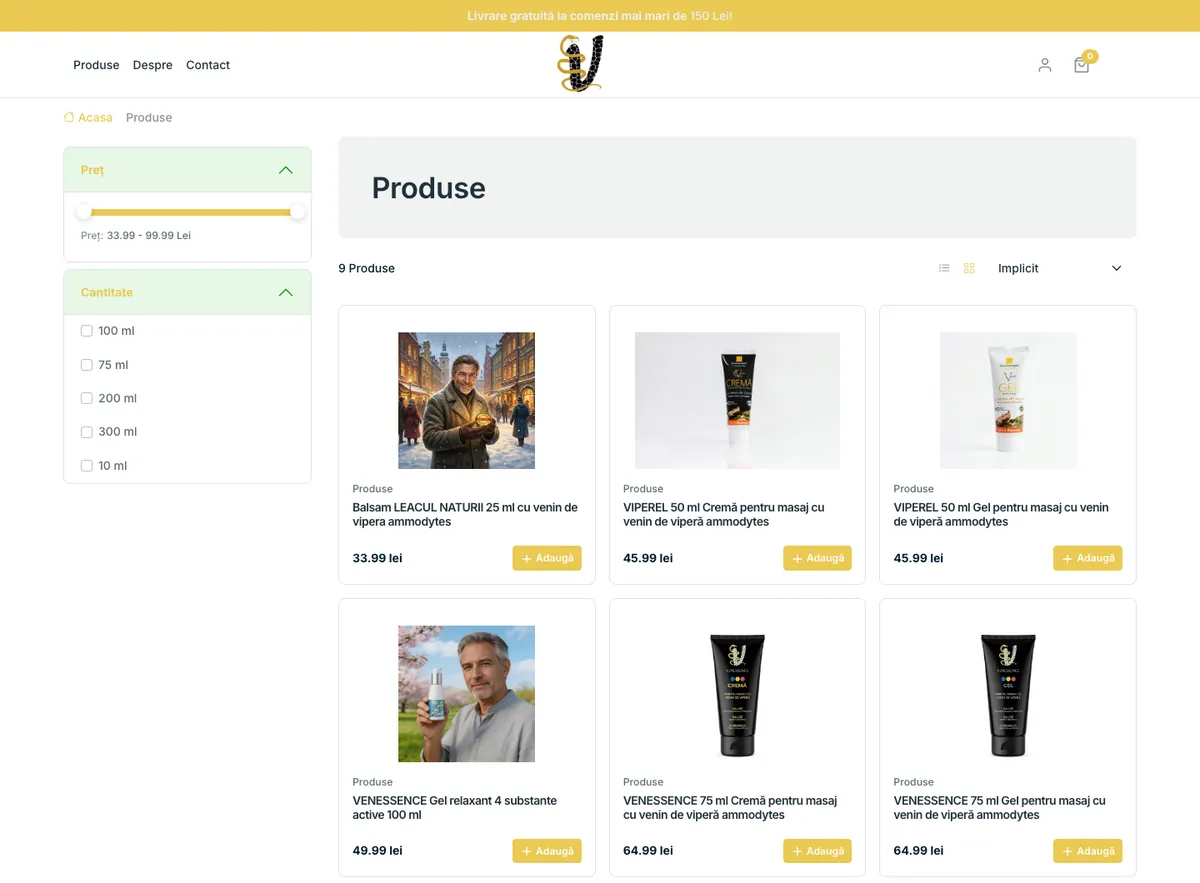
Yes. BayLaurelShop runs in Romanian and English, and Viper Cosmetics has a language switcher that translates its pages automatically for visitors from other countries.

Yes. The stores and platforms we build adapt to the screen, so they work on desktop, tablet and phone. For sales reps or customers who order often, we can also build a dedicated app: see mobile app development.

Yes. Romania is an EU member state, and Bucharest is one hour ahead of Central European Time, so our working day overlaps fully with Central and Western Europe. With international clients, specifications, demos and day-to-day communication are in English, and EU data protection rules apply to our work from the start.

Yes, for companies operating in Romania. The invoice is issued from the order data and reaches the ANAF SPV through the ANAF eFactura API, with the company's digital certificate; shipments can also be declared in RO e-Transport. We built this at Time Critical Line and Data Control, and we are the technology partner of eFacturia, an online invoicing software with RO e-Factura.

Source code rights and access are agreed in the contract, before development starts. We choose the hosting together, based on traffic, data volume and budget: your own server, a dedicated server or a cloud. Team access is configured by role.

// technologies

What software technologies do we use?

Our main technology for web projects is Laravel, a PHP framework with elegant syntax that scales easily and offers excellent security.

Laravel doesn't stop us from working with .NET, Java, Swift or other technologies when a project calls for it. We prefer it for the web because it lets us deliver similar projects faster, at a lower development cost.

  • Artificial intelligence
  • Deep Learning
  • TensorFlow
  • .NET Framework
  • .NET Core
  • Java EE
  • Python
  • PHP
  • main Laravel
  • React
  • Vue.js
  • Bootstrap
  • REST API
  • Android
  • iOS
  • Swift
  • Jira
  • Git
  • GitHub
  • Bitbucket
  • SQL Server
  • MySQL
  • MariaDB
  • MongoDB
// next step

Do you have a project you want to develop?

Write to us or give us a call and we will set up a meeting. We reply with questions first, then with a free quote that covers cost and timeline.

Or email us at contact@devteam.ro.